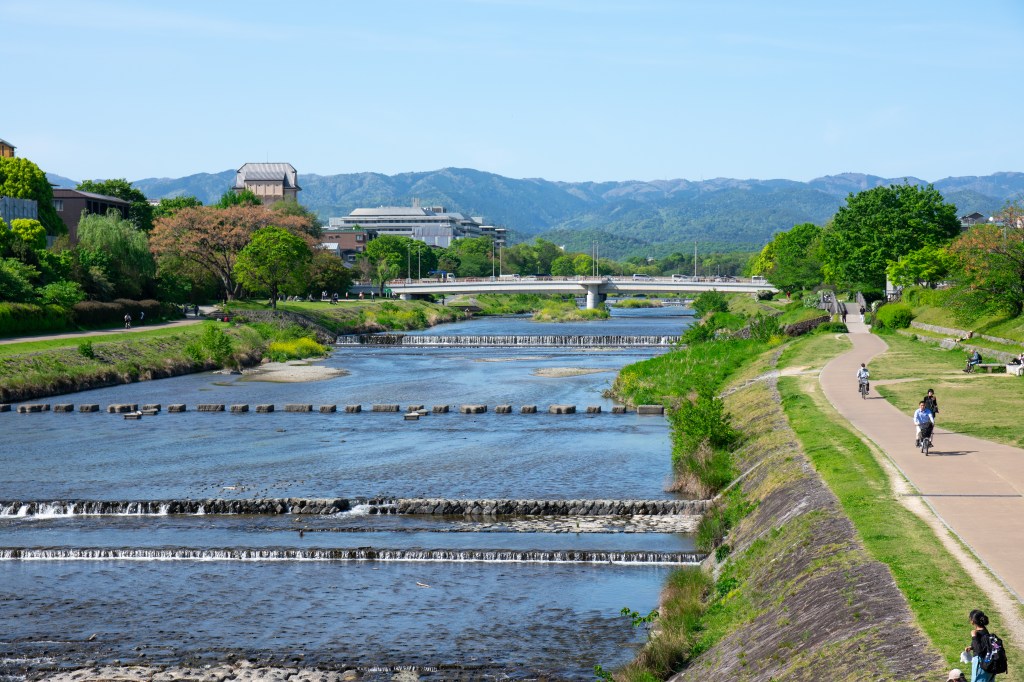
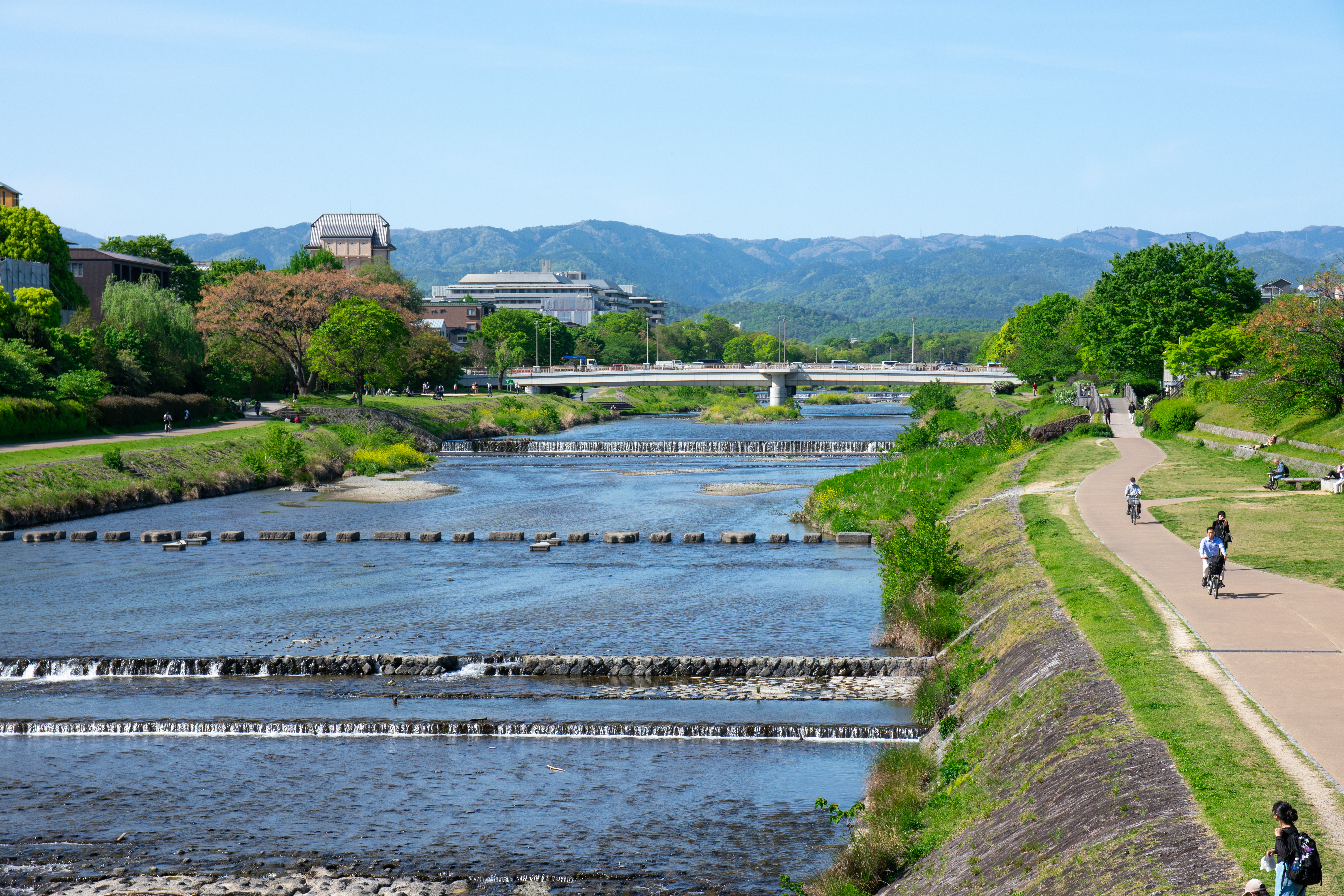
The Kamo River was exactly what I wanted it to be: quiet, cool, calm. It runs through the center of Kyoto with people on the riverbanks passing on bikes, people strolling along, an old woman talking to the crows from a bridge, people laying on the grass. It was almost shockingly serene for one of the most touristed cities in the world.
Tokyo Station at 9am, however, was a crucible. I was getting a 10am train and was early, of course, to figure everything out. The Shinkansen trains run almost every ten minutes and during regular seasons you don’t even need to book in advance or show up to your track more than ten or fifteen minutes ahead of time. But this was spring; Tokyo Station was swarming with roller suitcases and reservations were required for the express Nozomi train on the Tokaido line that runs between Tokyo and Osaka. (If you don’t need to leave first thing in the morning, I’ve no doubt the station in the afternoon would have been a little more mellow. Another tip: JR’s Smart Ex site wouldn’t accept any of my credit cards so I had to use Klook, which adds an extra fee but does work with any card.)
The Shinkansen was a dream. I didn’t even read a book during the 2.5 hour trip. Just Airpods and staring out the window. As stupid or infantile or perhaps neurodivergent as it sounds I was on cloud 9 riding that train.
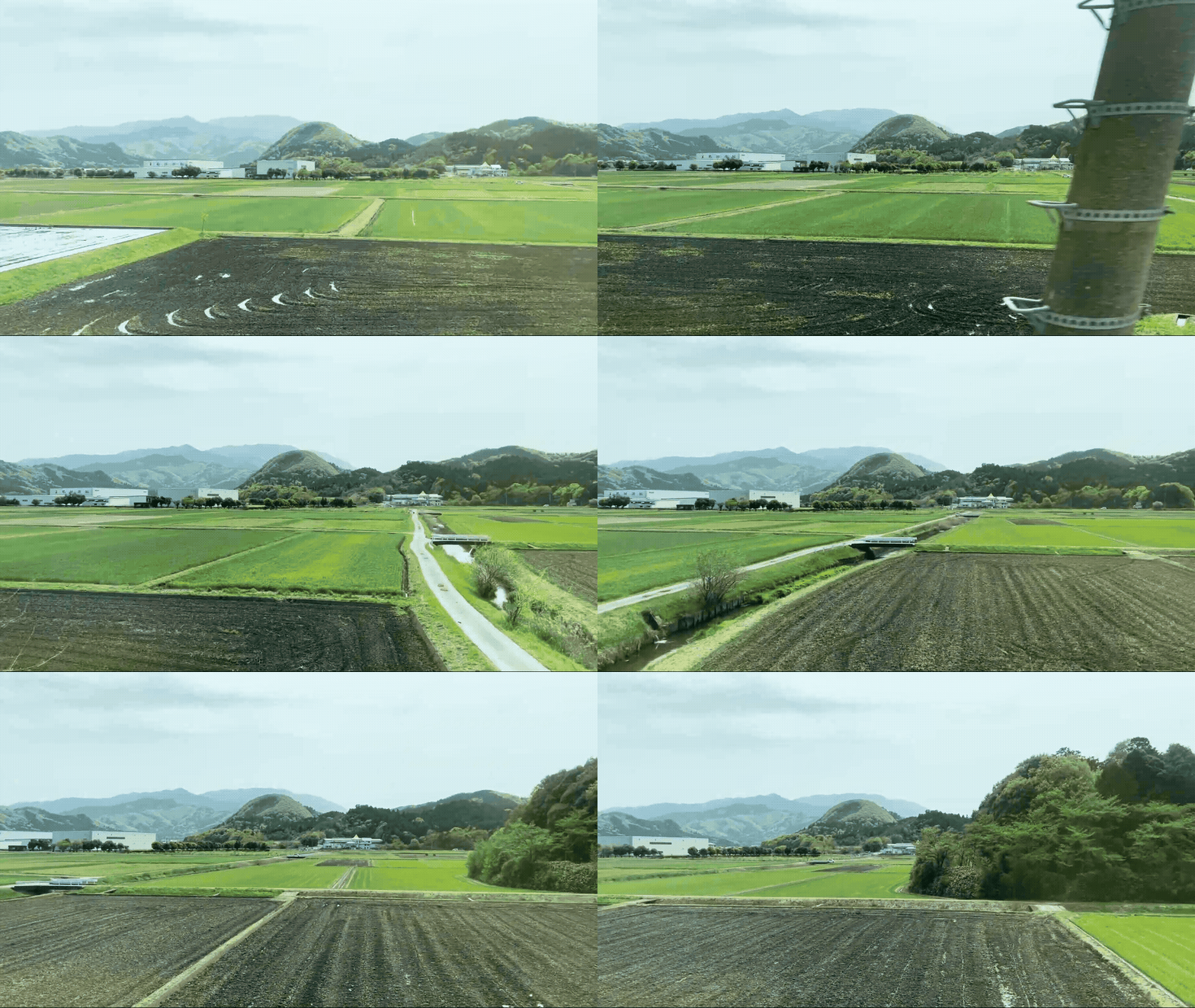
So much thought and research and consideration went into figuring out which train I needed, getting the ticket, figuring out how to get to Tokyo Station in time, finding the Shinkansen tracks and what track my train would arrive on, learning that the entry gate would require you to both scan a QR code and tap out of your previous subway trip, and getting the damn thing to work without holding up the river of people—so much thought goes into the mundane logistics of travel that when you’re finally in your seat and on your way, the sigh of relief deflates you entirely. Cloud 9.
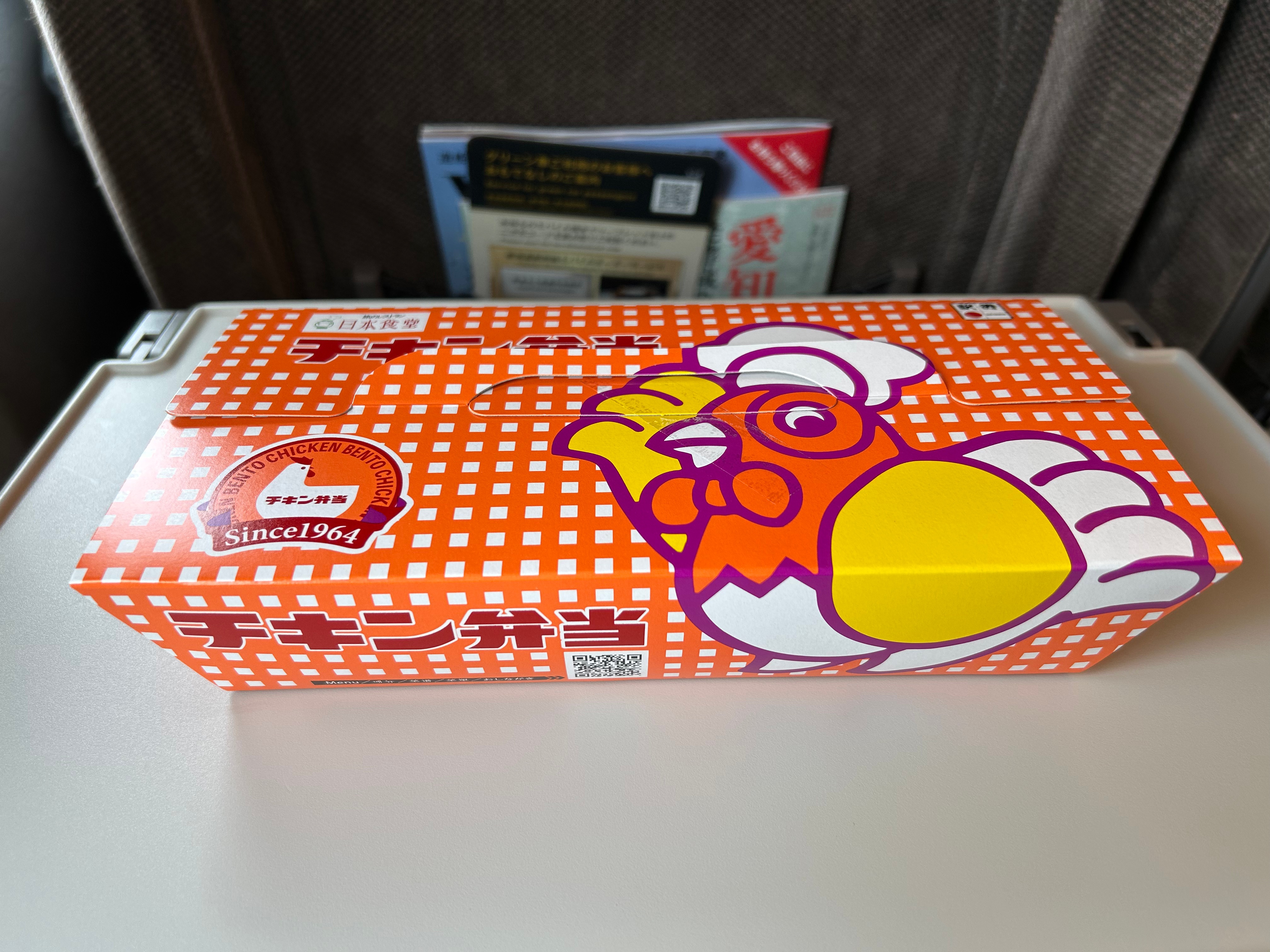
Since I was early I grabbed a cute chicken ekiben (box lunches they sell at the station) and ate lunch while watching the countryside fly by.
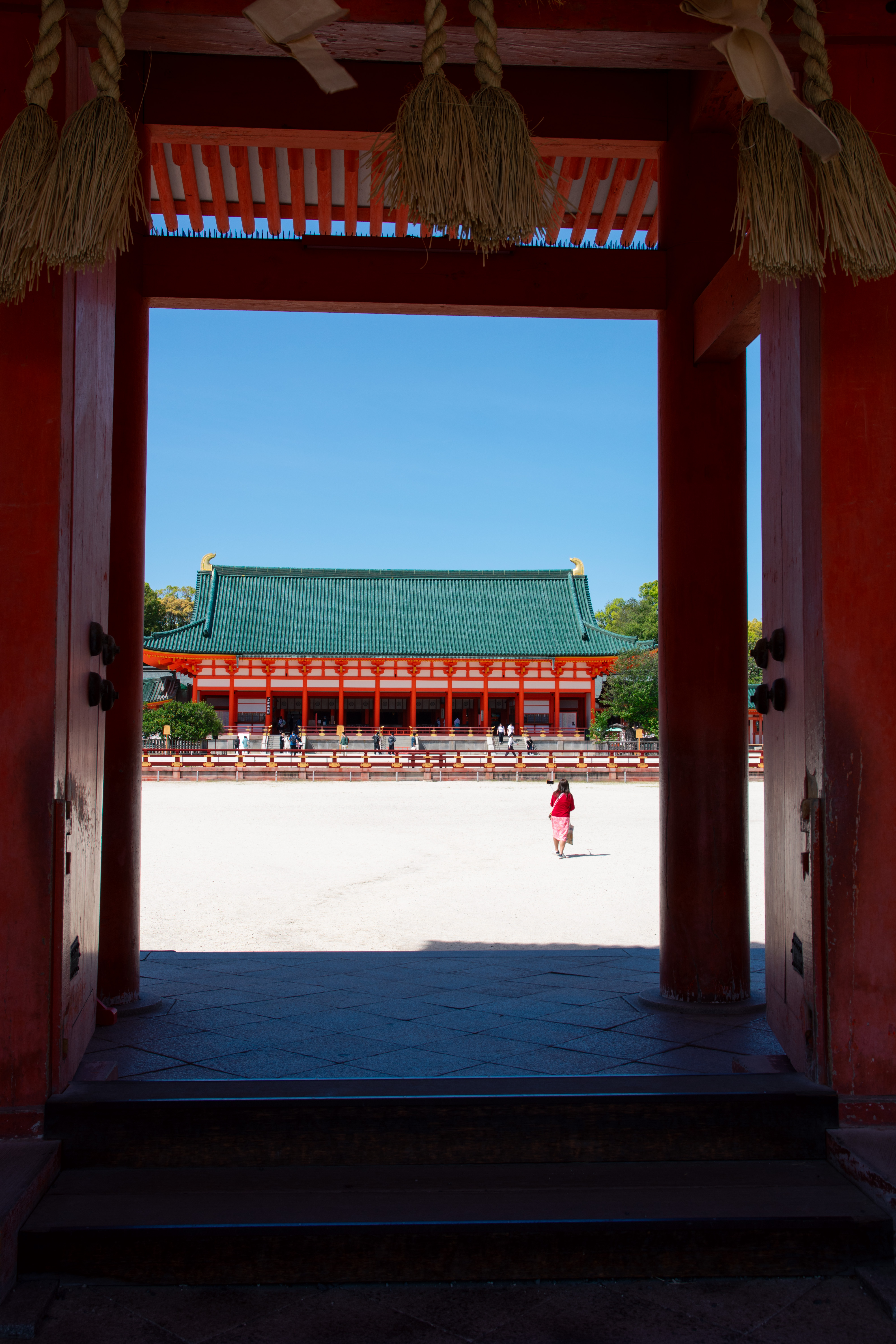
After dropping my luggage at the hotel I walked straight to the river and went north along the bank without a purpose or destination in mind. Eventually I picked what looked like a large temple on the map and headed in that direction, got a little lost—didn’t matter—and visited Heian Shrine with its vast open square.
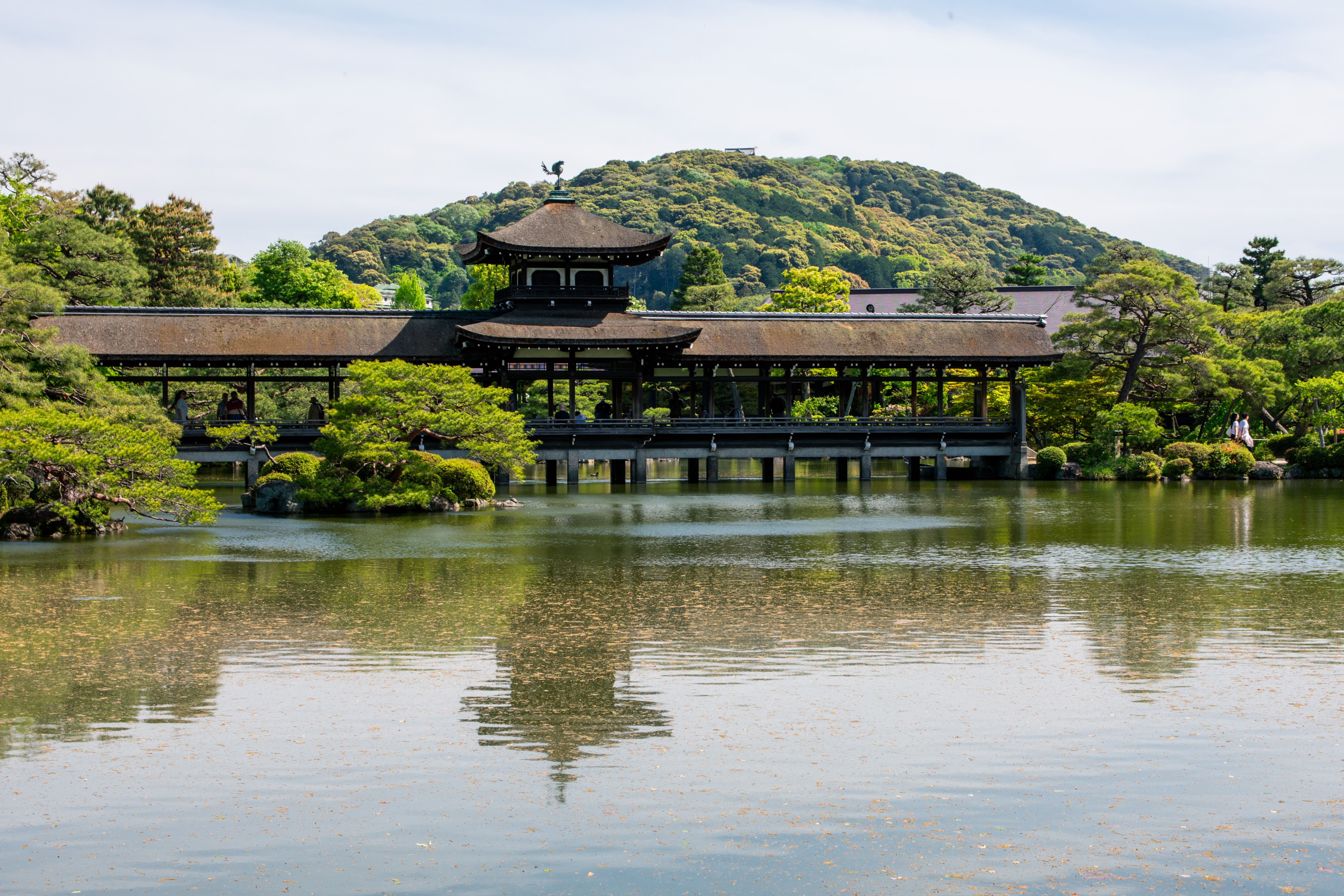
Their garden had a bit of theater to it: when you enter it starts off looking like someone’s well-tended back yard. Lovely but nothing amazing. But as you progress it gradually opens up into a lake overseen by a beautiful bridge and other traditional architecture. At first you wonder why you paid 600 yen but once you turn the corner it knocks your socks off.
There was a little baby bird sitting on the path and some young European tourists gently moved it aside with a leaf. As soon as they left the bird’s parents came swooping down, one carrying a twig, industrious and aware of their child on the ground. It’s nice when something that looks like a tragedy is not.
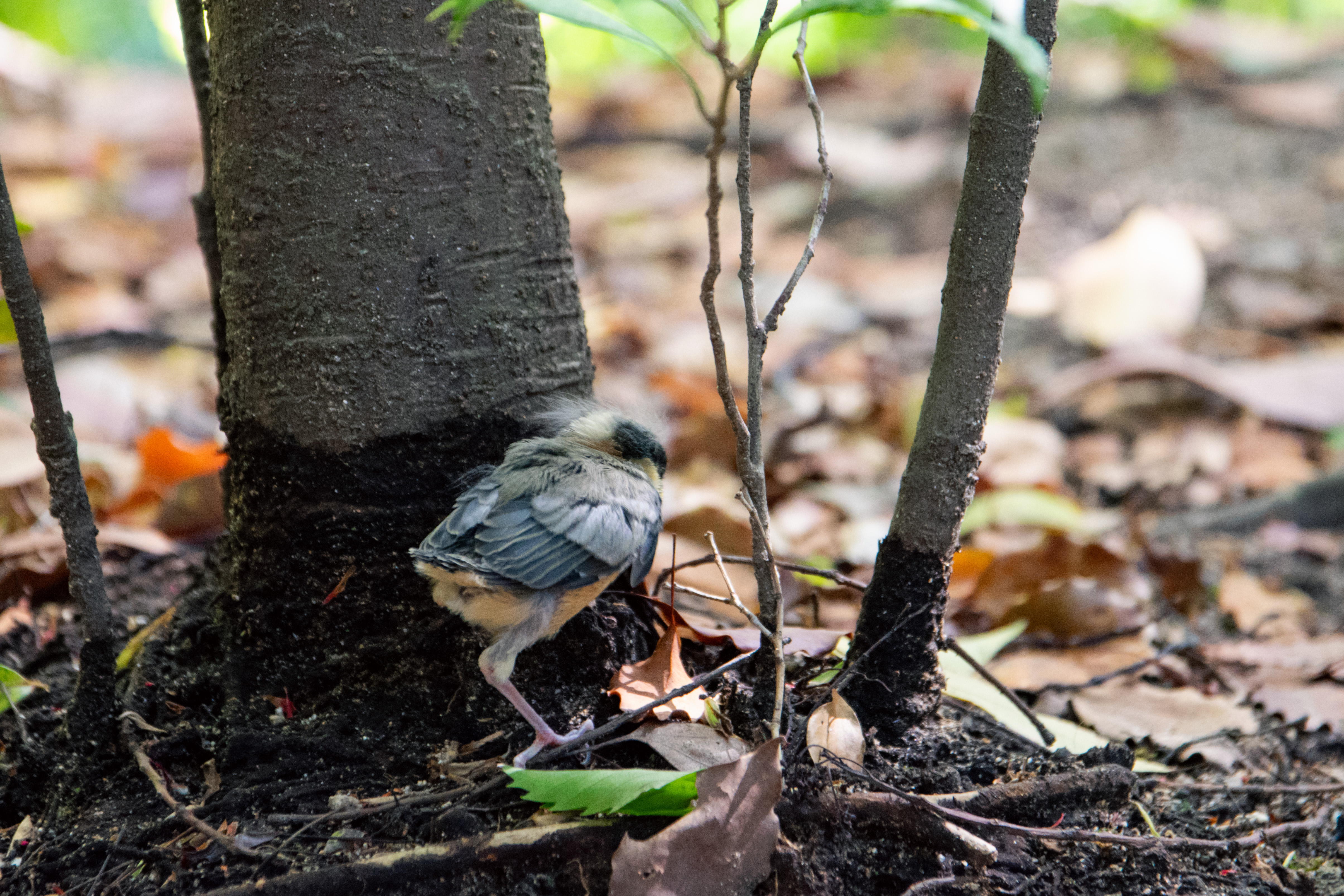
An elderly Japanese couple watched too and I said to them, pointing at the birds, “Otoosan to okaasan!” and they laughed. (“Father and mother!”)
Back at the hotel I lounged for a little while and then got a tonkatsu sandwich from a shop that was an offshoot of a Brooklyn location, which sparked my interest. I wanted to tell the owners I had just come from there but people working were just local kids.
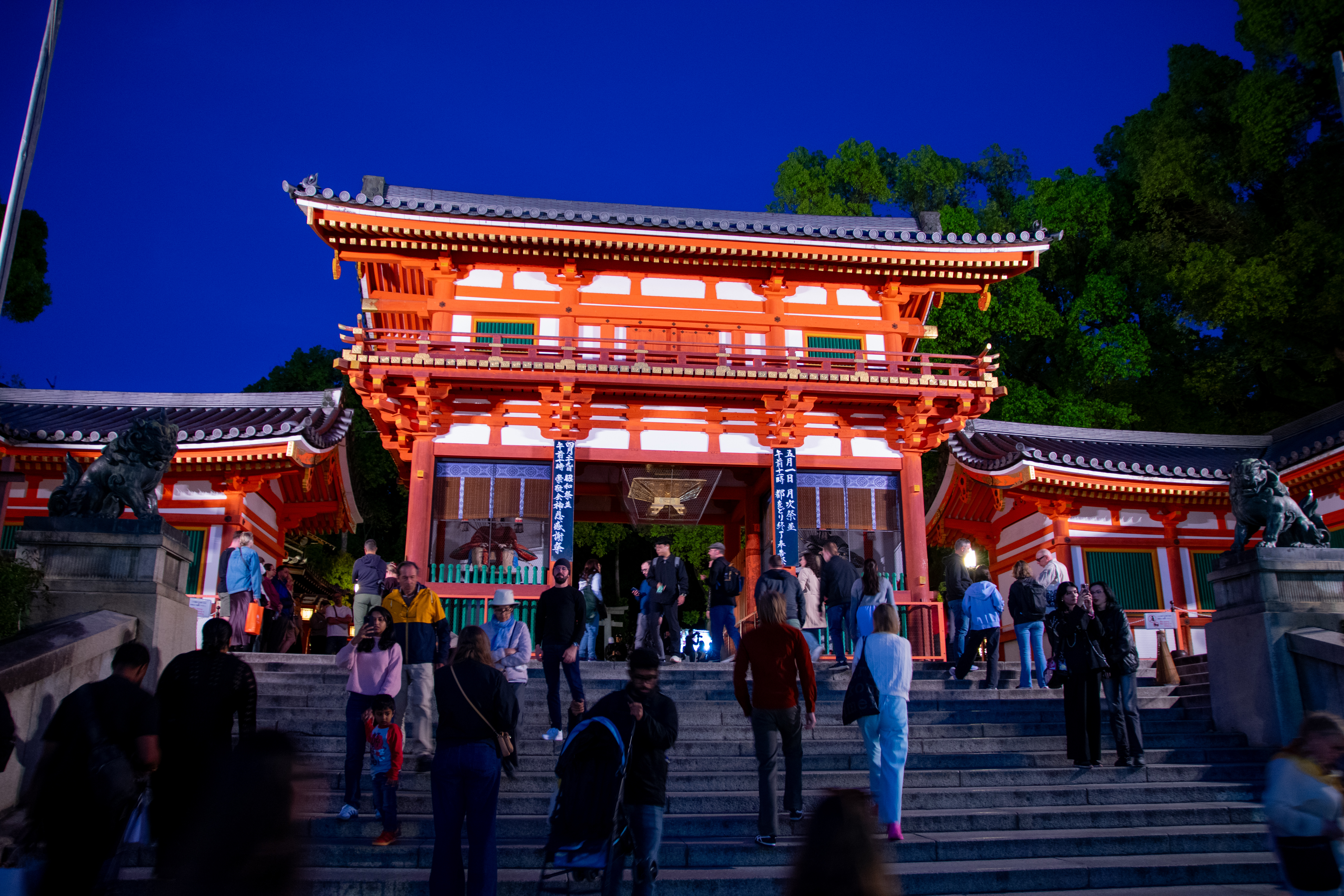
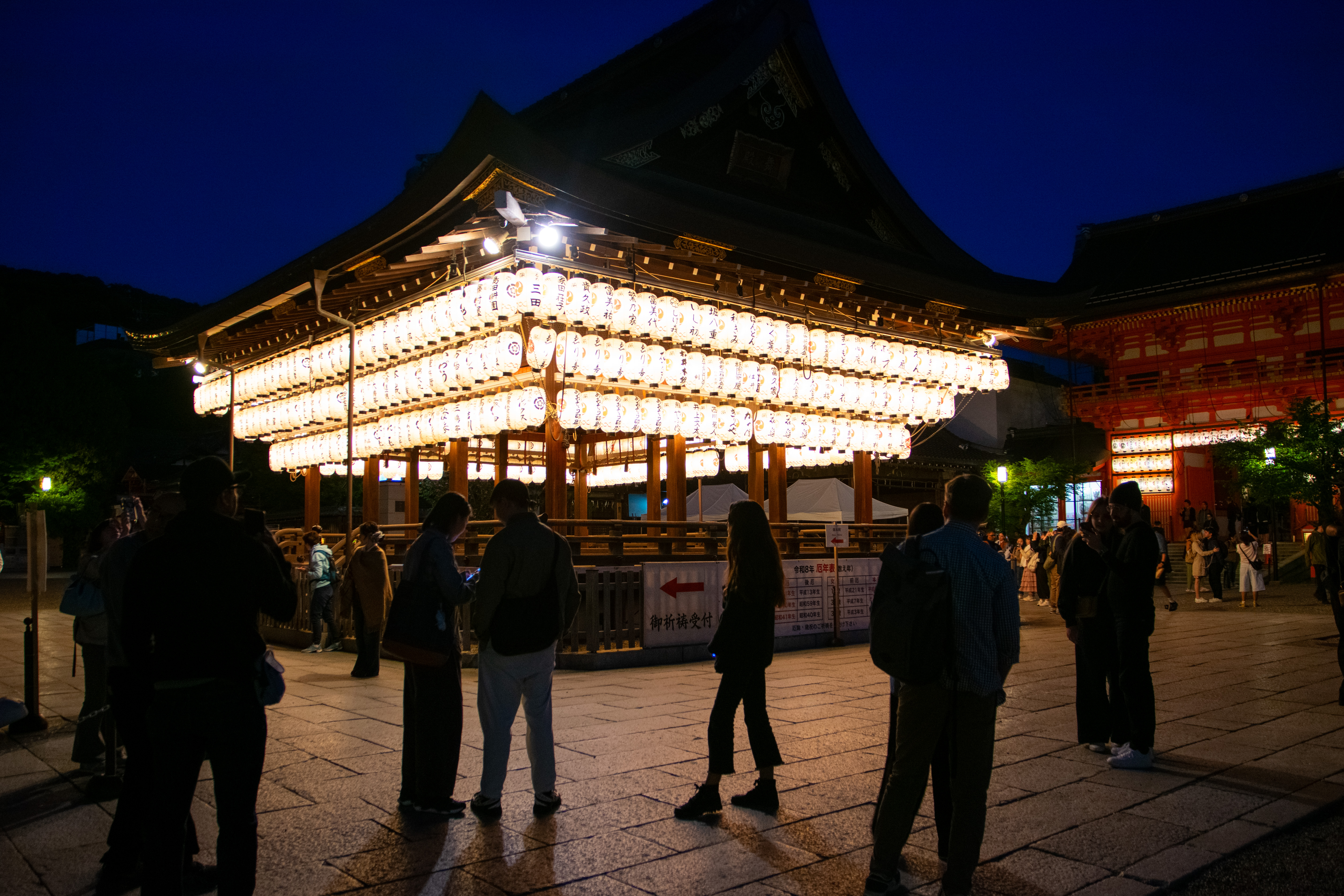
Then after sunset I walked to the Gion district, where you’ll find a lot of the traditional architecture that comes to mind when you picture Kyoto. Everywhere was crowded, unlike the first half of the day. I went up to the brightly lit Yasaka Shrine and took a bunch of night time photos, particularly of the stage.
Then, following the crowds, I walked down to one of the famous old streets—Hanamikoji Street—which was quite dark at night, lit only by lanterns. (Oddly, given their commitment to the traditional aesthetic, the street was still open to car traffic and police had to corral tourists out of the center of the street whenever a car passed.)
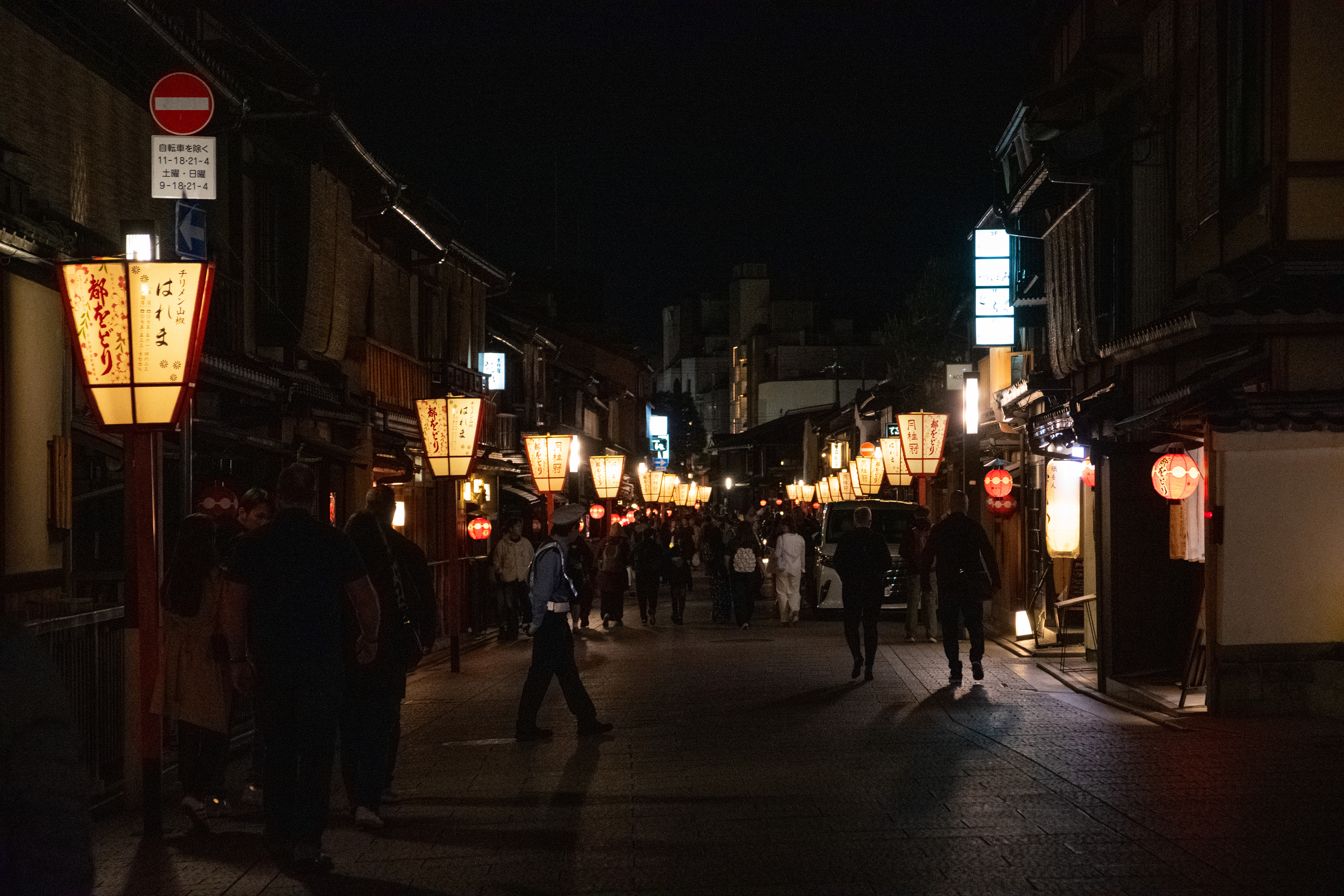
Some streets in this area (the primary geisha neighborhood of Kyoto) are private and prohibit photography but it wasn’t exactly clear at night which those were, so I was conservative in my picture taking. It altogether wasn’t too pleasant because of the crowds; there are probably better areas to visit.
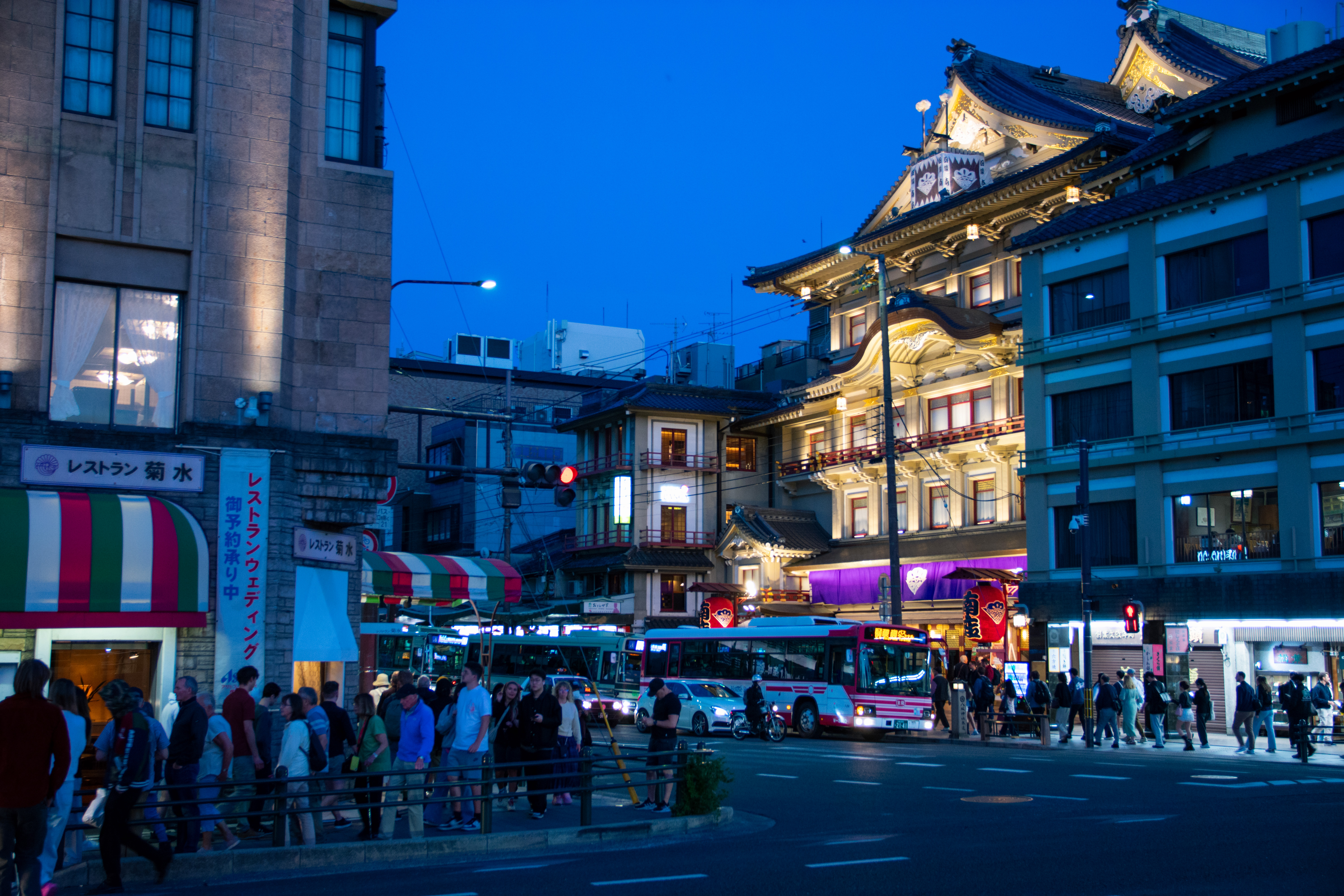
I walked back towards the hotel in a modern area with tons of shops and the sidewalks were bustling around 8pm.
Just 4.9 miles today, 13,617 steps.


Leave a comment