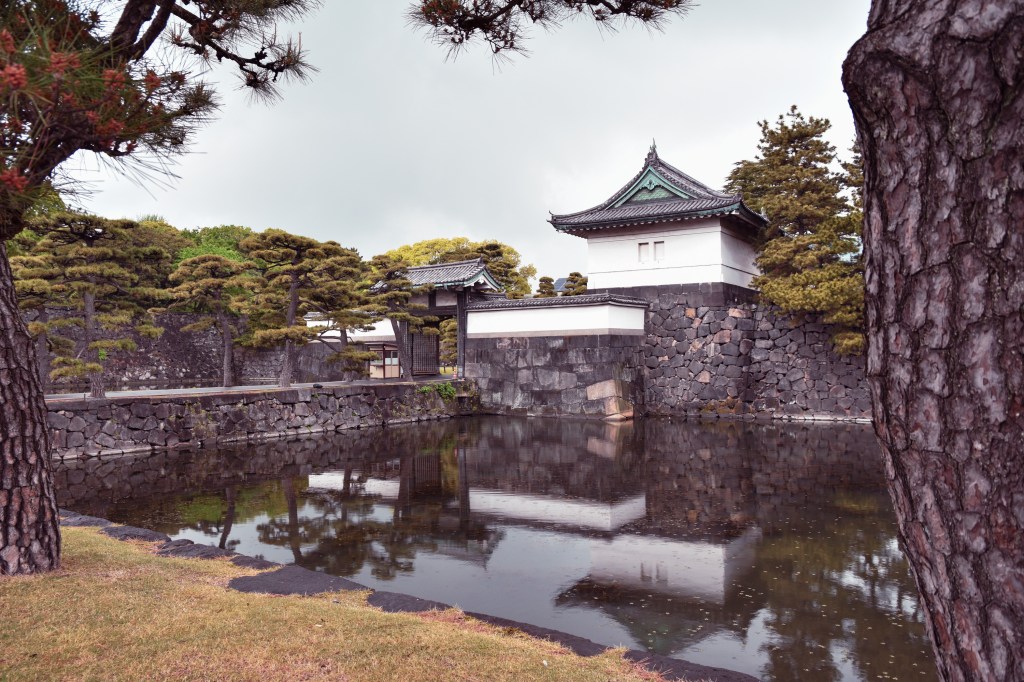

For once I put some forethought into where I should go and planned a route: first the Imperial Palace, then Shimokitazawa, and finally back to Akihabara to find some Dragon Balls.
Tokyo Imperial Palace is a vast, quiet open space. Rather, the gardens are. The palace itself is not open to visitors but the grounds are beautiful.
After getting off the train at Takebashi station and entering through the northern Kita-hanebashi-mon gate, I was immediately face to face with the remains of the old tower.
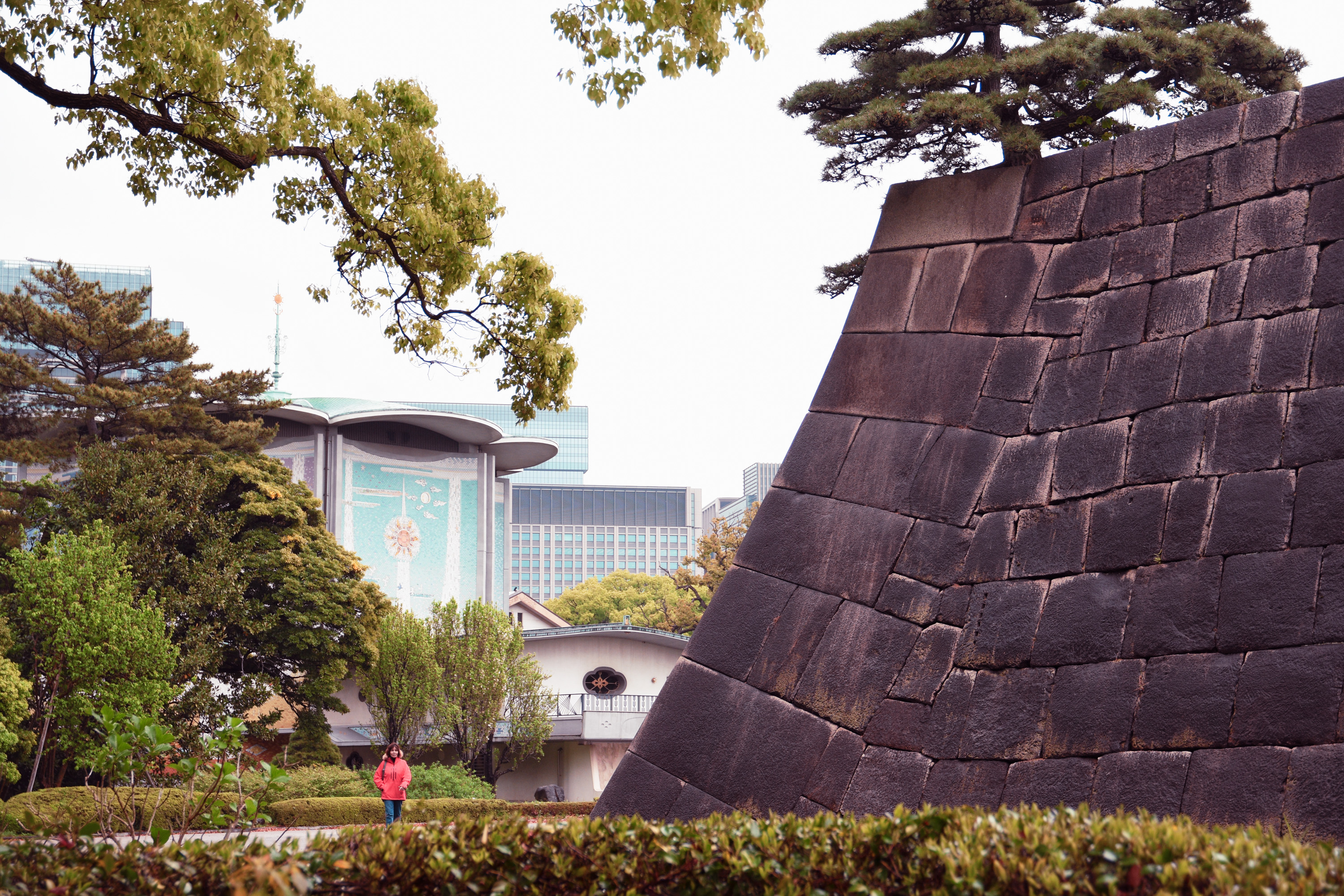
The base is a huge stone structure with giant, interlocking hand-carved stones that reminded me of Machu Picchu. That itself was worth the trip. The vast gardens were quiet and peaceful under the light rain that left leaves glistening and made the air smell fresh and verdant. It was nice. Relatively sparse and minimal, but a nice morning walk.

Then I headed to Shimokitazawa, a trendy neighborhood full of vintage clothing stores. I thought it would be an interesting digression from the central tourist spots.
I’m not sure what I expected to find — maybe a cool t-shirt with an old Japanese baseball team logo, something like that — but amusingly, their idea of vintage fashion was XXL Nike t-shirts, American college sweatshirts, Hard Rock Cafe jean jackets, Champion windbreakers, and all the sort of things you’d find at the least interesting thrift stores in the U.S. I guess everyone wants what they don’t have — in this case, 1990s Kmart Americana. I didn’t buy any clothes.

Then ramen again in Shimokitazawa. It was much subtler and lighter than the others I tried—I ordered what appeared to be their ‘special’, not knowing what it was, though I think it was shio ramen — with unique, thick hand-pulled noodles. Delicious, filling, and so warming across your entire body you’d wish it were snowing out. It was a charming, local shop with good vibes all around.
The neighborhood was very pleasant, and like most places in Japan, quiet. It felt far out from central Tokyo (though I was only a few miles from Shinjuku) and was the sort of place that you’d actually want to live, as opposed to, like, Kabukicho. It was enjoyable just to wander around even though I wasn’t young and cool enough for the baggy Ohio State sweatshirts and bucket hats.

Then I headed back to Akihabara, determined to find something Dragon Ball. I had said that I no longer cared about collecting stuff but that was a lie. I needed to find Goku.
Particularly because the recent passing of the author and artist Akira Toriyama, I was hoping to grab some original Dragon Ball manga from the 80s and 90s. And I thought I’d find it in droves, like you’d find old copies of Goosebump books or other mass market paperbacks in a used bookstore. But, no. Apparently the 80s were forty years ago.
I went to Bookoff’s main Akihabara location, a used bookstore/media chain that’s famous for its wide selection and low prices. All of their wares were quite recent, though — they didn’t have much of anything more than five years old, and I was looking for my childhood. The clientele were primarily just Japanese dudes young and old standing in the aisles and reading currently-running manga rather than shopping for nostalgia’s sake.
I would guess it might be easier to find that older stuff outside of the most touristed areas of Tokyo that have already been picked clean.
All was not lost, though. I did find Dragon Ball Super manga (the most recent series from a few years ago) and picked up a couple of volumes. And it is delightful. So much so that’s created a new problem for me: now I want the entire run of the series. But no more stuff.
They didn’t have many vintage video games at this location either (there are other shops in Akihabara more specialized in that). And I hadn’t planned on buying any, BUT…
But — I ran across a Super Famicom copy of Seiken Densetsu 2, otherwise known as Secret of Mana. When I was in high school I was going to lend a friend my already ten-year-old copy of the Super Nintendo game. I showed it to him in the locker room while we were getting dressed for PE, and after class when we came back, I found the metal door of my locker twisted open. Someone had broken in and stolen the old Nintendo game. Panic and heartbreak.
So it was a small balm on an old wound to have finally replaced it.
Yakitori for dinner. A tiny local place in Asakusa just around the corner from where I was staying. It was exactly what you’d picture — two elderly people behind the counter making food for six or so seats—but the language barrier immediately became a little humbling. First they tried to tell me to put my backpack in a closet and I had no idea what they were gesturing towards. Then, I told them my order and didn’t understand the follow up questions so they handed me an English menu. Of course, I could have just spoken English from the start and that would have been fine — they do that all the time — but I tried and mostly failed this round. Nonetheless, it was very good.
They asked if it was okay to include organ meat with the yakitori (that’s what I couldn’t understand) and, already embarrassed to be a bumbling foreigner, I said “daijoubu!” to save face. Yes please! Of course I’ve never eaten that stuff and didn’t know how I’d handle it. But I was a big boy and went with it.
Not great, but not terrible. It was just the unfamiliar texture of the liver, like the consistency of a meat-flavored chocolate truffle. After an initial big bite I realized I had to pace myself, and bit by bit, it was fine. But everything else, the other parts of the chicken, even the hearts, were very, very good.
(I had eaten sushi the previous night and had already learned my limitations. I enjoyed common items like fatty tuna but the some of the unfamiliar chewy textures, especially of the raw calamari, were a struggle.)
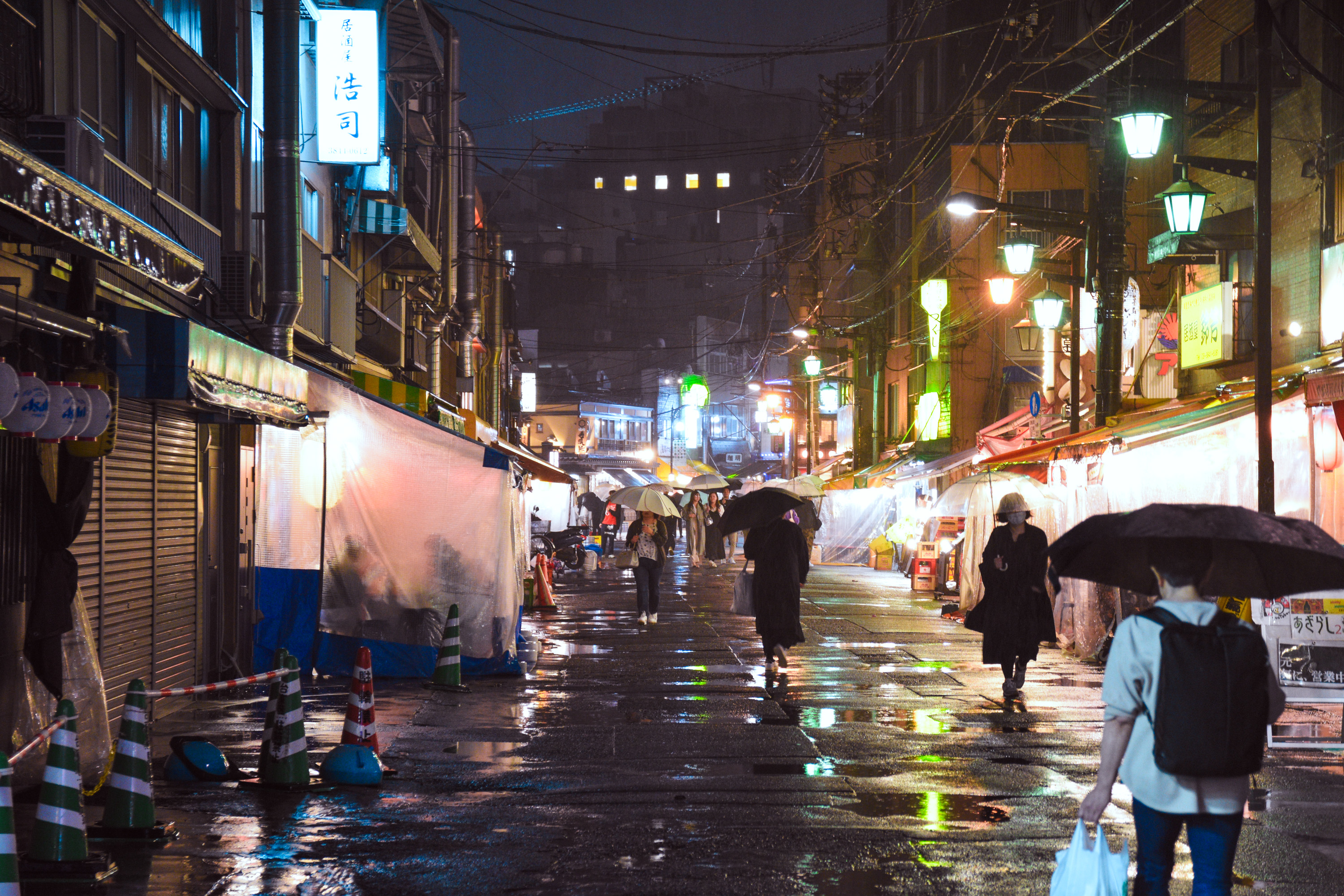
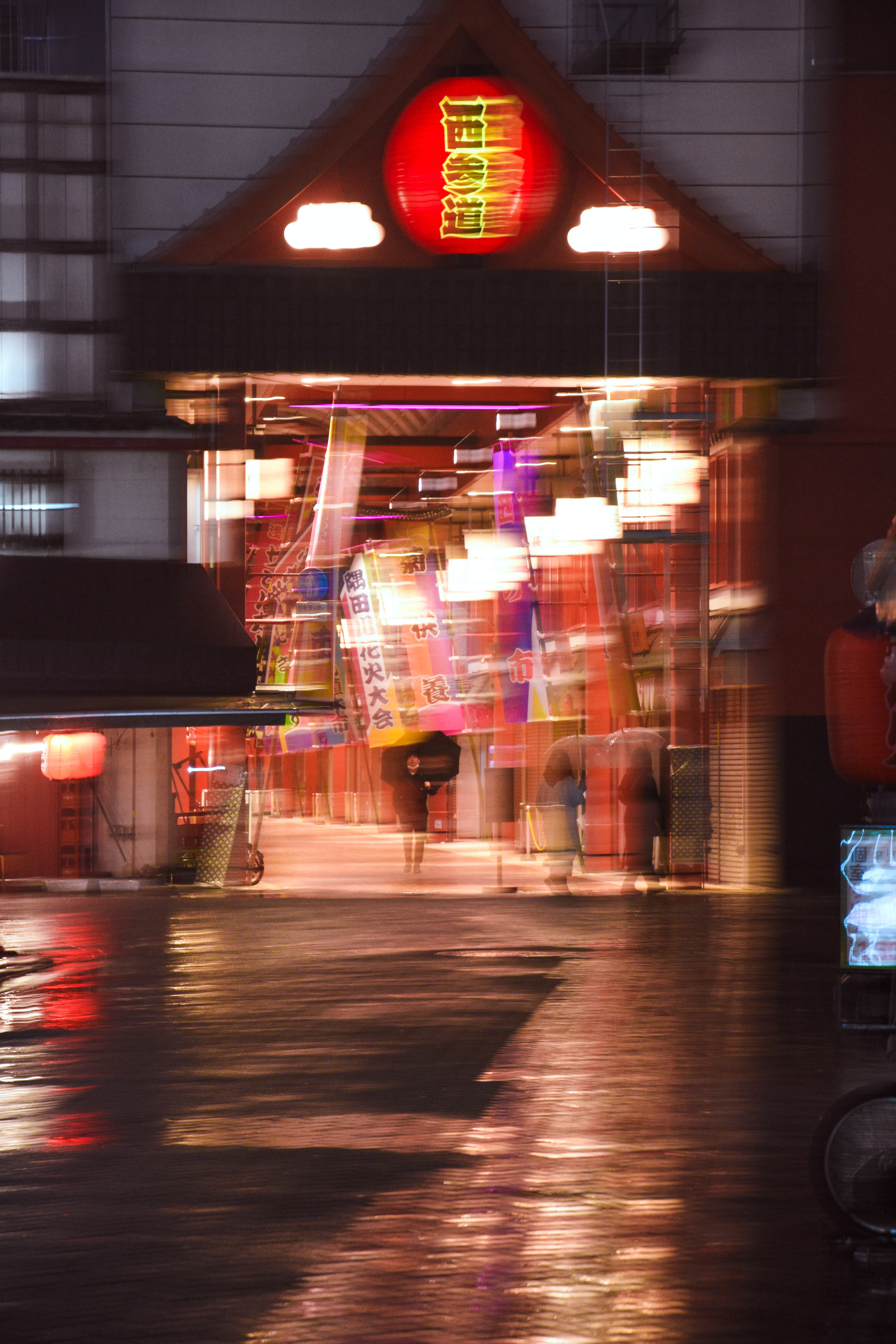
Afterwards I took more photos around Asakusa in the night rain. It was raining so much at this point that I was risking my camera beneath my barely-there broken umbrella but that was okay — none of my gear was new or even valuable. And it was worth the risk. You can’t catch the tiger without venturing into its cave, or something like that.


 cocopunk
Leave a comment