

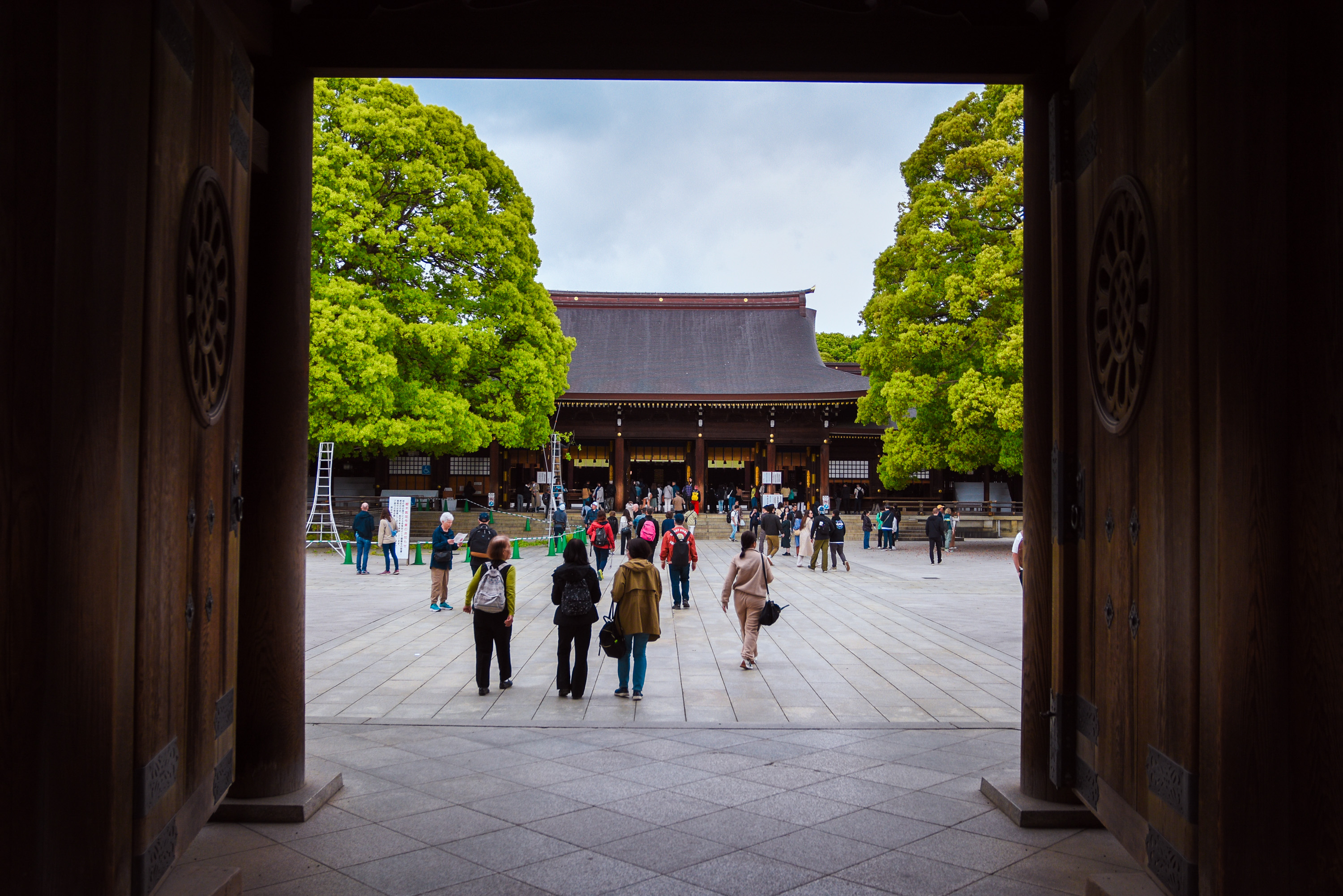
The next morning I went to Meiji Jingu, a Shinto shrine southwest of Shinjuku and north of Shibuya.
I kept getting lost after I got off the train, wandering one way for a few hundred feet, then another direction, then another, but that provided some interesting railway imagery, at least.

I totally forgot that you can orient Google Maps like a compass to make the map face wherever you are facing and had been trying to read the map upside down. That would have been helpful the past few days.
Meiji Jingu is deep within a forested park, giving it a completely different atmosphere than other urban shrines and temples like Senso-ji in Asakusa. An as you trek into the park beneath the trees and away from the noise of the city, and through an enormous wooden tori gate, you can’t help but feel that you are entering a sacred place. You do not need to be told.

At a fountain outside the shrine I followed the illustrated instructions and washed my hands and rinsed my mouth to purify. Many skipped the mouth part — but doing what was instructed seemed the most respectful thing to do. And facing the interior of the temple, I proceeded to toss some yen in the collection box, clap twice, bow, and clap again. I don’t know if that was exactly right but it didn’t matter. It felt like a sacred place and I was humbled to be there. It was beautiful. It felt profound.
In front of the shrine I bought two charms — one for myself and one to give away. For myself, a victory and perseverance charm. Why victory and perseverance? Because I don’t need fortune; I just want to triumph over the bastards who’ve wronged me. I’m just kidding, I think. Not really.
The charm had a QR code on its packaging (like most sacred totems do) and the shrine’s website made it more clear that this charm was geared towards sports and competitions. Well, if I’m recruited into any pick-up basketball games at least I know I’ve got an edge.

Afterwards, I went one train stop south to Shibuya to get lunch and just to see what it was like. Perhaps because there were so many people, my phone couldn’t coordinate my exact location when I got off the train, so I got lost again and just chose a direction and walked. But the charm worked and I ran directly into the famed Shibuya crossing.

It is indeed a large, busy intersection. (And by the way, a pox on whoever coined the term ‘Shibuya scramble’. I don’t like that. And yet it has stuck as a name.)
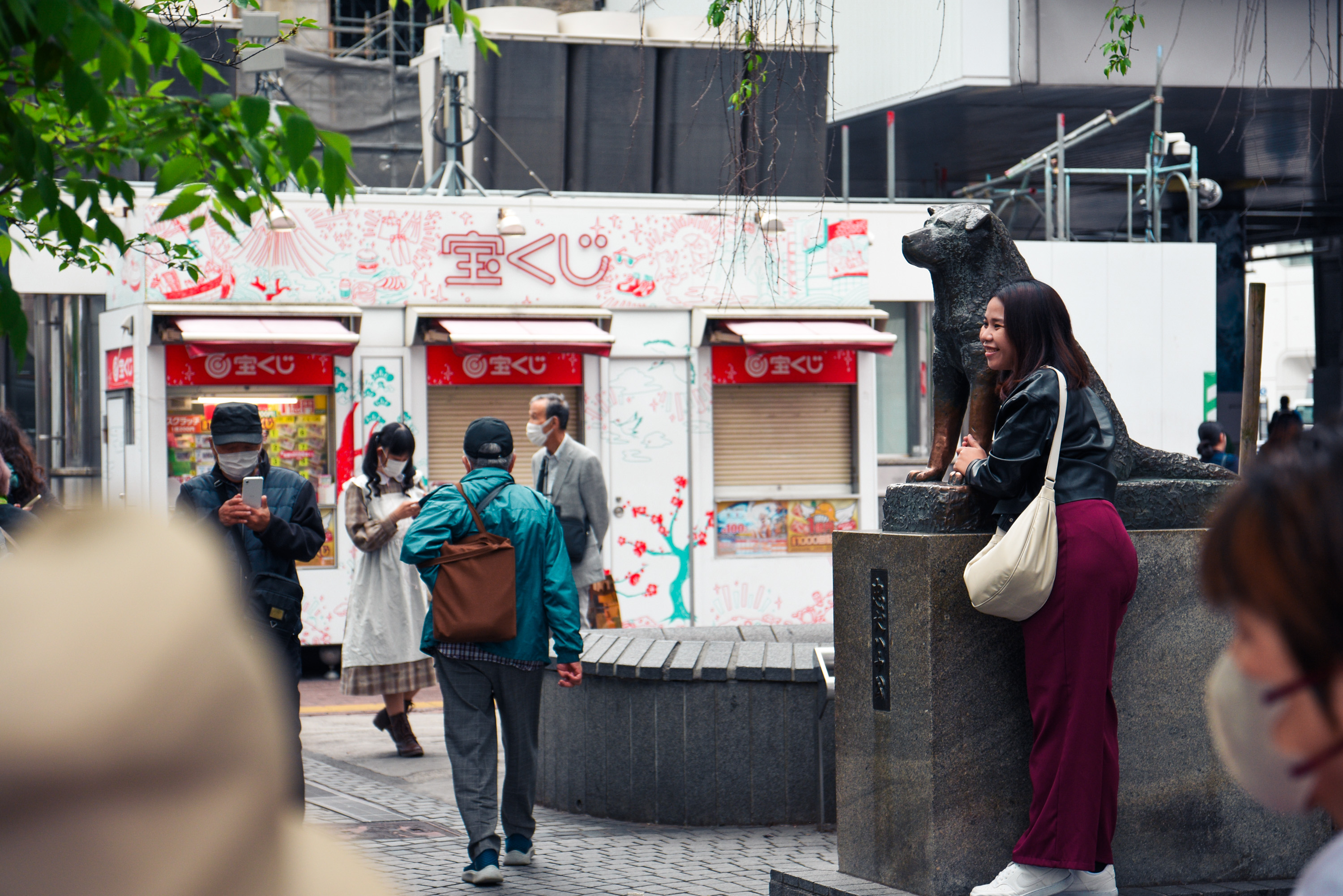
The Hachiko statue is there too, but is a bit underwhelming due to its popularity and its placement. It feels like a statue at a bus stop. (Because, well, it is. That is literally the story behind the faithful dog waiting at the train station.)

After wandering around Shibuya for bit I ate at a place called Yaro Ramen, a sort of utilitarian ramen shop that is mostly known for its big portions, I think. The only other people eating while I was there were lone Japanese men, which is some kind of statement itself (ipso facto, utilitarian). It was good though, and huge, with a giant pile of bean sprouts topping the bowl of ramen. It couldn’t touch my previous religious experience with niboshi ramen in Shinjuku the day before, though.
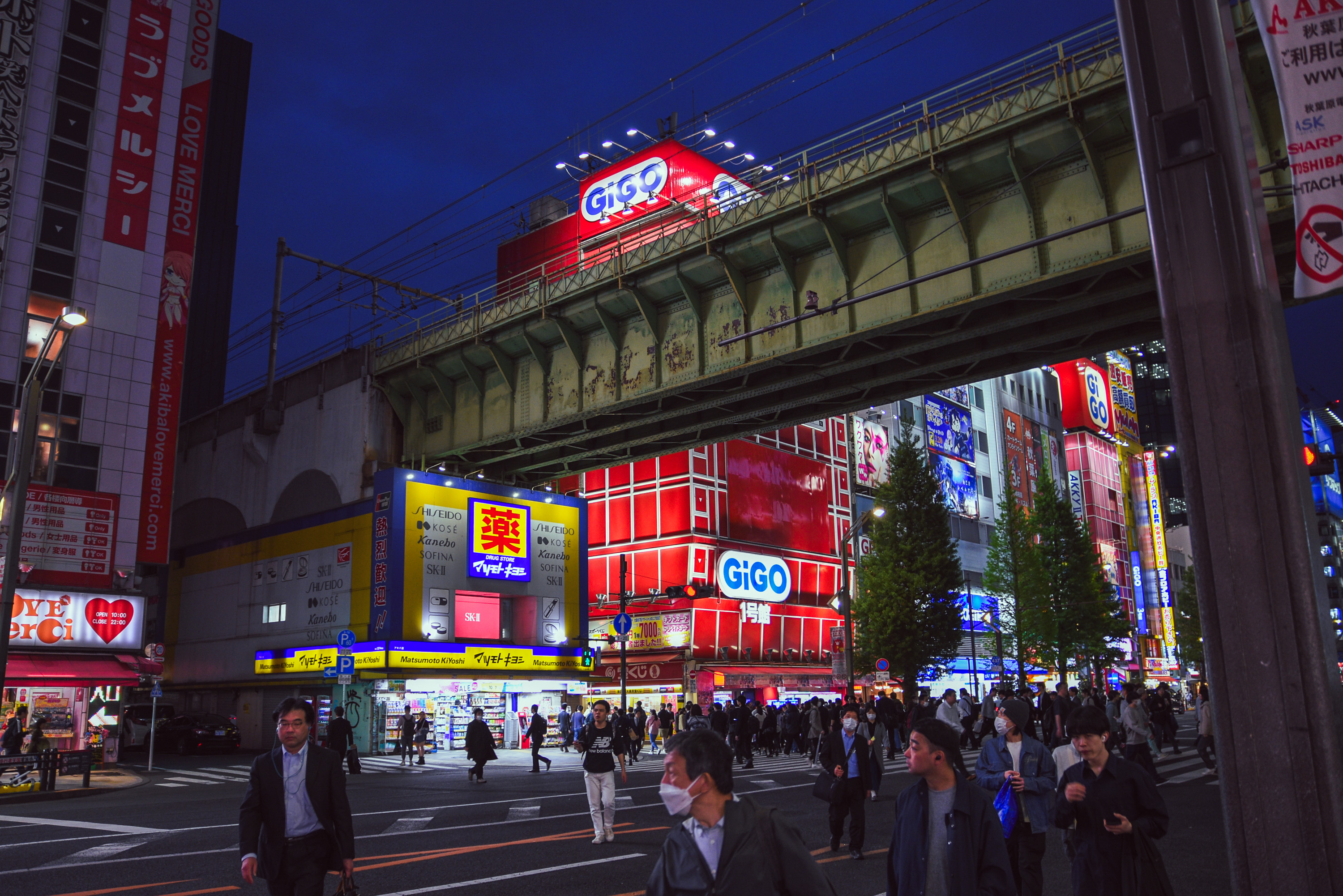
Akihabara was smaller than Shinjuku — at least the “Electric Town” of shops plastered with ads for anime, games, and manga, which is only a few blocks wide.
At night the streets were lined with young woman in whimsical maid outfits. They stood every ten feet holding fliers for maid cafes, establishments where you buy food and drinks while one of these maid girls socializes with you. It sounds more salacious than it is — they’re more like themed cafes than anything else and have become a quirky staple of the neighborhood. But yes, it is still a weird vibe.
Many of the girls on the street didn’t seem particularly enthused with the task of standing around while holding fliers for passersby limp in their hand, or perhaps were weary of older gaijin with giant cameras around their necks. Others said “kombanwa!” as you passed and flapped the fliers to be plucked.
I really didn’t know if I should politely decline or to ignore them altogether, so I treated them like any sales people on the street and acted like they didn’t exist. That was the general tenor of everyone else on the street too—you just keep walking. I didn’t even take a photo! And what a good photo it would be, entire city blocks lined with fantasy maids lit by the bright, colorful store lights.
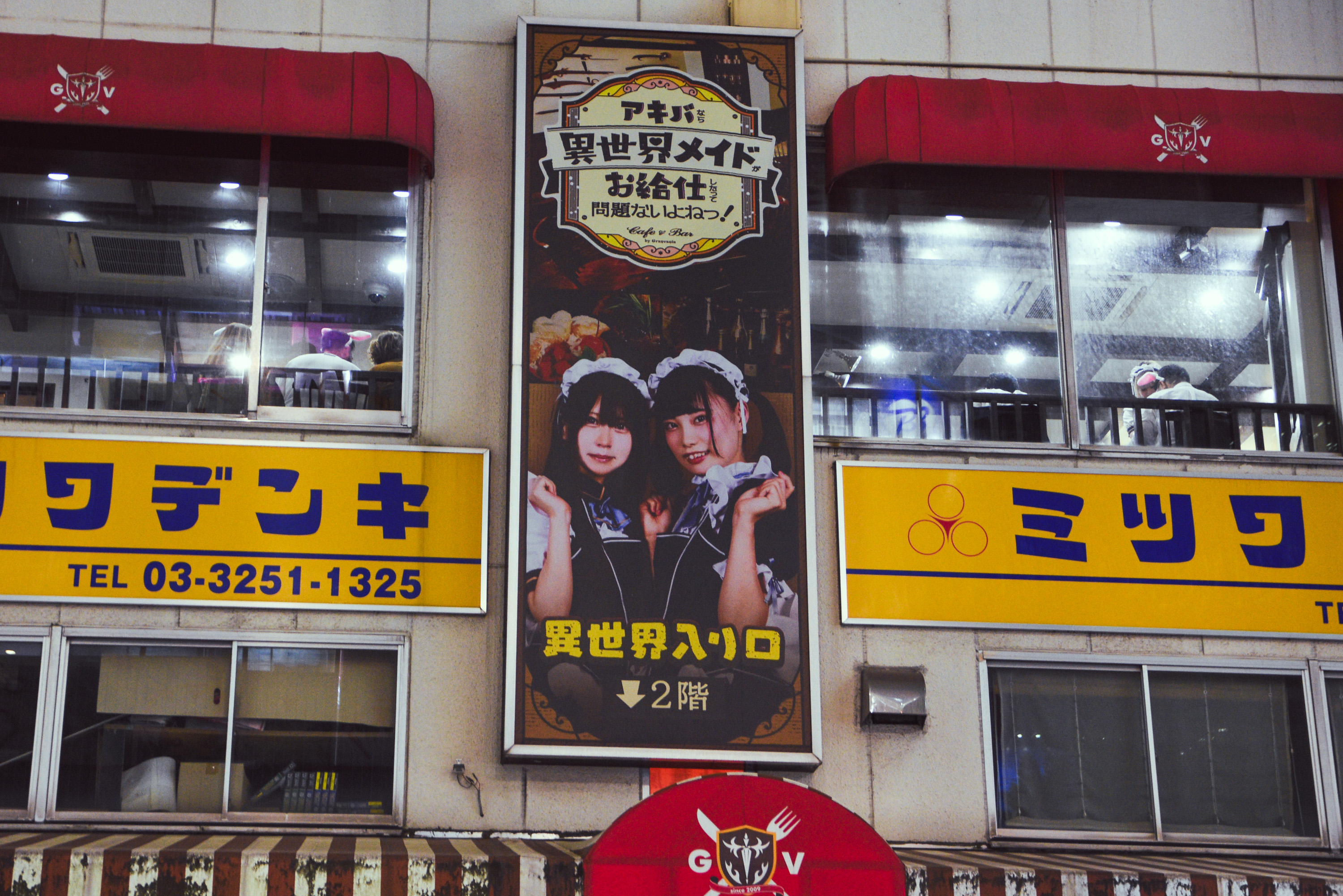
I didn’t really care to seek out all the anime, manga, and video game stores (though I did go back later for that purpose). I’m past caring much about stuff, when the internet has made everything and anything available all of the time, to anyone with money.

It was a good day though. Meiji Jingu touched me. I must be getting old, to be moved by a literal temple and not the temples of otaku in Akihabara.
 cocopunk
Leave a comment